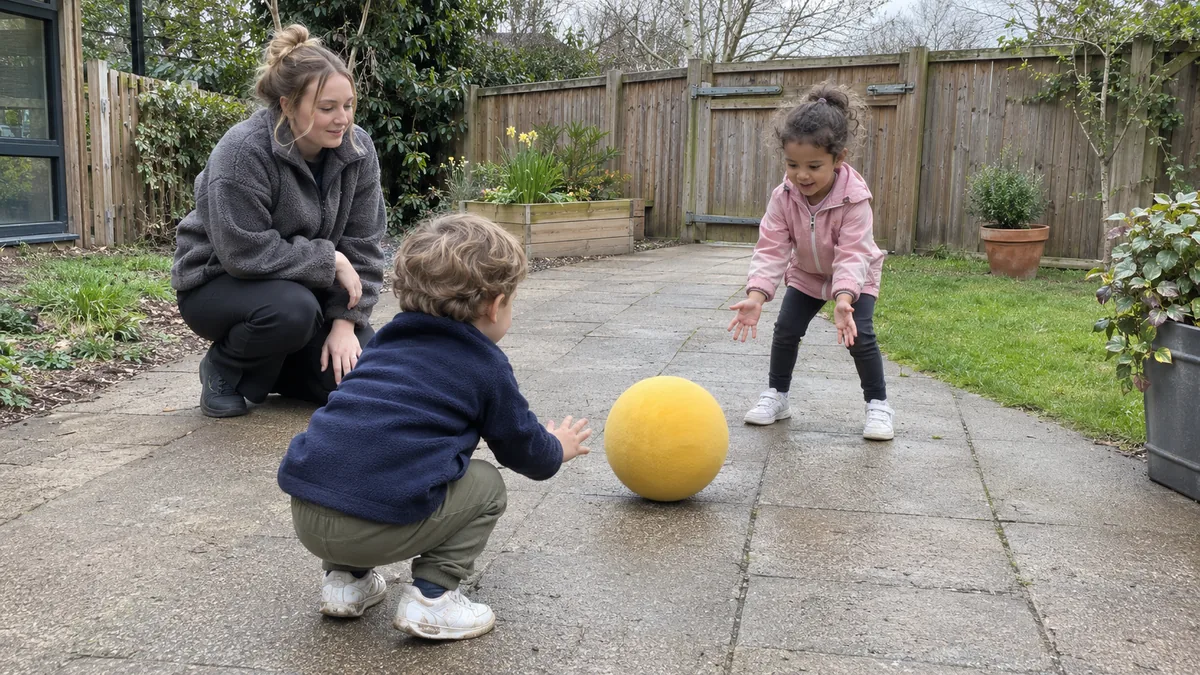
Practitioners see children’s physical development in everyday moments, from an infant reaching during floor play to a child steering through a busy outdoor space. This one-hour awareness course is for early years practitioners, childminders, nursery managers and health visitors who want to understand what these movements can show and how their setting can support them. It focuses on early years practice in England and signposts official guidance for clinical, safeguarding and other specialist decisions.
Explore gross and fine motor skills from birth to five, the role of movement in learning, and why children develop along different pathways. The course also covers UK physical activity guidance, prolonged periods of sedentary time, physical literacy and ways to build movement into an inclusive day.
Why Take This eLearning Course?
The same child may move differently outdoors, at home or at a crowded table. Understanding the demands of an activity helps adults notice progress, make play more accessible and share clearer observations with families and colleagues.
This course will help you to:
- Recognise the movement demands of everyday tasks such as carrying, pouring and using simple tools.
- Plan opportunities to practise across indoor play, outdoor play and ordinary routines.
- Make more room for children to choose, repeat and adapt movements.
- Notice where long inactive periods can displace movement or interaction.
- Use specific observations when talking with families and colleagues.
- Locate provider-specific guidance for England and UK activity recommendations.
Learning Outcomes
By the end of this course, you will be able to:
- Describe physical development as a prime area within England’s Early Years Foundation Stage.
- Explain how practice and sensory feedback support movement and learning.
- Distinguish gross motor skills from fine motor skills and describe broad changes from infancy to Reception.
- Explain the difference between sedentary time, physical inactivity and sleep.
- Outline UK physical activity guidance by age.
- Identify ways to support positive and inclusive movement experiences.
- Describe how practitioners observe and share developmental concerns within their role.
Physical Development in Early Years Course Outline
The course follows six modules, beginning with the foundations of movement and ending with observation and provider responsibilities.
Module 1: Physical development as a prime area
Learners will relate movement to exploration, play and participation in the Early Years Foundation Stage. They will distinguish gross and fine motor skills, explore how sensory feedback shapes movement, and consider confidence, enjoyment and understanding as parts of physical literacy.
Module 2: Movement from infancy to Reception
Learners will follow broad changes from supervised awake tummy time and floor exploration to changes of direction, combined movements and object control. The module explains how access, familiarity and individual starting points affect what practitioners observe.
Module 3: Fine motor control through play
Learners will explore how children grasp and release objects, use both hands and coordinate hand movements with what they see. They will consider how material size, weight, position and resistance shape experiences with everyday tools and mark-making.
Module 4: Active and sedentary time
Learners will compare UK activity recommendations by age, including the change from age five. The module distinguishes long sedentary periods from purposeful rest, explains the relevance of screen-use guidance in England and shows where ordinary routines can offer more time to move.
Module 5: Physical literacy and inclusive provision
Learners will consider how outdoor surfaces, space, adult support and time for repetition influence children’s confidence and choices. The module examines barriers to participation and how two-way conversations with families can reveal what helps a child take part.
Module 6: Observations and responsibilities in England
Learners will describe what useful observations capture and how staff share developmental concerns. They will identify the roles of early years staff, specialist professionals and statutory safeguarding partners, and explore how Ofsted considers physical development within applicable inspection arrangements.
Target Audience
This course is suitable for:
- Nursery and early years practitioners.
- Childminders and their assistants.
- Nursery managers and room leaders.
- Nursery and Reception staff in schools.
- Health visitors and children’s centre staff working with families.
No previous specialist knowledge is required.
FAQ
What does physical development in early years include?
It includes control of larger movements, such as balancing and turning, and of smaller movements, such as grasping and releasing objects. The course also explores how play environments and adult support affect children’s opportunities to practise.
Will I learn how milestones vary?
Yes. The lessons describe broad patterns from birth to five, and explain how the setting, the availability of support and a child’s own starting point influence what adults observe.
Does it cover physical activity and sedentary time?
Yes. The course explains UK recommendations for infants, toddlers, preschool children and children from age five. It explores how everyday movement can fit alongside quiet learning, rest and sleep.
Is this course relevant to different early years providers?
Yes. It distinguishes the England EYFS frameworks for childminders and for group and school-based providers. It also explains where practitioners can find their applicable inspection and safeguarding guidance.
How long does the course take?
The course is self-paced and usually takes around 1 hour to complete.
Will I receive a certificate?
Yes. A certificate is issued after successful completion.
Build a clearer picture of how children’s movement develops and how everyday choices in a setting can open up ways to take part.
Enrol now to build your understanding of physical development in early years.