
The Professional Boundaries in Domiciliary Care course is designed for care workers and other staff who support people in their own homes. It explains how clear professional boundaries help protect people using services, care workers and organisations while supporting respectful, compassionate and trusting relationships.
This free course explores professional and personal relationships, warning signs of blurred boundaries, gifts and hospitality, financial arrangements, social media, personal contact details and out-of-hours contact. Learners will also consider boundary crossings and violations, safeguarding concerns, respectful ways to maintain limits, and when concerns should be reported or escalated.
Why Take This eLearning Course?
Professional relationships in home care can become familiar over time, particularly where workers regularly support the same person in a private home. This course helps learners recognise situations where boundaries may become unclear and respond in ways that remain compassionate, accountable and consistent with agreed working practices.
This course will help you to:
- Understand what professional boundaries mean in domiciliary care.
- Build warm and supportive relationships without becoming over-involved.
- Recognise early signs that a professional relationship is becoming too personal.
- Respond appropriately to gifts, hospitality and financial requests.
- Maintain safe boundaries when helping with shopping or money.
- Use social media and personal contact details appropriately.
- Respond professionally to contact outside working hours.
- Set clear limits when clients or relatives make inappropriate requests.
- Recognise when a boundary issue may also be a safeguarding concern.
- Know when to record, report and escalate concerns.
Learning Outcomes
By the end of this course, you will be able to:
- Define professional boundaries within domiciliary care.
- Explain how boundaries protect people using services and care workers.
- Identify circumstances that can make professional limits harder to maintain.
- Recognise warning signs of blurred or changing boundaries.
- Explain appropriate responses to gifts, hospitality and financial arrangements.
- Describe safe procedures when handling shopping, payments and money.
- Apply professional boundaries to social media and personal communication.
- Distinguish between a boundary crossing and a serious boundary violation.
- Identify situations in which boundary concerns may require safeguarding action.
- Describe how to maintain, record, report and escalate professional boundary concerns.
Professional Boundaries in Domiciliary Care Course Outline
Module 1: Understanding Professional Boundaries
Learners will explore what professional boundaries mean within domiciliary care and how the professional role differs from friendship or other personal relationships. The module explains how care plans, workplace responsibilities and agreed procedures provide limits for professional practice, even when support takes place in a person’s own home. Learners will also consider how boundaries protect both parties and why familiarity, loneliness, long-term support and relationships with relatives can sometimes make professional limits more difficult to recognise.
Module 2: Recognising and Preventing Blurred Boundaries
Learners will examine how professional relationships can gradually become personal through excessive disclosure, repeated favours or a growing sense of personal responsibility for someone outside agreed working arrangements. The module covers common warning signs such as extra unpaid time, favouritism, difficulty saying no and secrecy. It also explains how friendly communication, care plan focus, role awareness, workplace policies and professional reflection can help workers remain compassionate without becoming over-involved.
Module 3: Gifts, Hospitality and Private Financial Arrangements
Learners will consider the boundary issues that can arise when people using services or relatives offer gifts, money, hospitality or other benefits. The module explains how value, frequency, workplace policy and possible conflicts of interest should influence a worker’s response. Learners will also explore how to decline or report gifts appropriately and why borrowing, lending, private buying or selling, personal financial benefit and secret financial arrangements are incompatible with safe professional relationships.
Module 4: Safe Support with Shopping and Money
Learners will explore how to maintain clear boundaries when shopping or financial support forms part of an agreed care service. The module explains the importance of authorised tasks, clear role limits, receipts, accurate records, separation of personal and client money, approved payment methods and prompt reporting of discrepancies. Learners will also identify situations that may indicate theft, fraud, coercion, exploitation or financial abuse and understand why these concerns should be reported rather than managed privately.
Module 5: Social Media, Personal Contact and Out-of-Hours Communication
Learners will examine the risks created when personal social media and private communication channels overlap with professional care relationships. The module covers friend or follow requests, private messaging, confidentiality and inappropriate online sharing. It also explains why personal telephone numbers, email addresses and home addresses should normally remain private, how approved workplace communication routes support professional practice, and how workers should respond when people contact them outside agreed working hours.
Module 6: Boundary Crossings, Violations and Safeguarding
Learners will distinguish between a boundary crossing that requires reflection or correction and a more serious boundary violation involving exploitation, abuse, secrecy or significant disregard of professional responsibilities. The module explores inappropriate financial benefit, personal or sexual relationships, confidentiality breaches, favouritism and deliberate disregard of procedures. Learners will also consider when financial exploitation, coercive pressure, neglect or other harm may turn a professional boundary concern into a safeguarding concern requiring formal action.
Module 7: Responding to Pressure and Maintaining Limits
Learners will explore common ways in which people using services or relatives may test professional limits, including requests for extra time, additional tasks, personal benefits, private contact, secrecy or unofficial involvement. The module explains how workers can respond using clear language, polite acknowledgement, explanations of their role and suitable approved alternatives. Learners will also consider how to respond when pressure continues by maintaining the limit, recording relevant concerns and seeking management or safeguarding support where required.
Module 8: Seeking Advice, Reporting and Professional Escalation
Learners will consider when professional boundary situations should be discussed with a supervisor or manager, particularly where gifts, money, personal contact, conflicts of interest or changing relationships create uncertainty. The module explains how to report concerns factually and promptly, preserve relevant information, use escalation or whistleblowing procedures where appropriate and continue professional care while a concern is handled. Learners will also understand why serious safeguarding and boundary concerns should not be investigated or managed by an individual care worker alone.
Target Audience
This course is suitable for:
- Domiciliary and home care workers.
- Care assistants and support workers providing care in people’s homes.
- New staff completing induction or role-specific training.
- Experienced workers refreshing their professional boundaries knowledge.
- Supervisors and team leaders supporting home care staff.
- Organisations providing community-based care and support services.
No previous specialist knowledge is required.
FAQ
Who is this course suitable for?
This course is suitable for people who provide care or support in a person’s own home, including domiciliary care workers, care assistants, support workers and staff who supervise home care teams. It can be used for induction, refresher learning or wider workforce development.
Do I need any previous experience?
No. The course introduces professional boundaries clearly and is suitable for new and experienced care workers. Previous specialist knowledge of professional boundaries or safeguarding is not required.
What will I learn on this professional boundaries course?
You will learn how professional boundaries apply to home care relationships, how boundaries may gradually become blurred and how to respond to gifts, money, personal contact, social media and requests outside your role. The course also covers reporting, escalation and situations where a boundary concern may become a safeguarding concern.
Will this course help with day-to-day practice?
Yes. The course focuses on situations that care workers may encounter during ordinary home visits, including requests for favours, extra time, private contact, gifts or financial assistance. It explains how to respond respectfully while keeping support within agreed professional limits.
Does the course cover practical skills?
The course develops practical decision-making skills rather than hands-on care techniques. Learners consider how to recognise warning signs, communicate professional limits, use approved procedures, keep appropriate records and seek help when a situation becomes unclear or concerning.
Does it cover safeguarding responsibilities?
Yes. The course explains how professional boundary concerns involving exploitation, coercion, neglect, financial abuse or other risks of harm may require safeguarding action. It also reinforces the importance of recording factual information and reporting concerns through approved organisational procedures rather than investigating them personally.
What does the course say about gifts and money?
Learners will consider appropriate responses to gifts and hospitality, private financial arrangements, shopping and authorised handling of money. The course explains why transparent procedures, accurate records and clear separation between professional duties and private financial interests are important.
Does the course cover social media and personal contact details?
Yes. Learners will explore friend requests, private messaging, online confidentiality, personal telephone numbers, email addresses and contact outside working hours. The course explains why approved workplace channels help maintain clear professional relationships.
How long does the course take?
The course is self-paced and usually takes around 1 hour to complete.
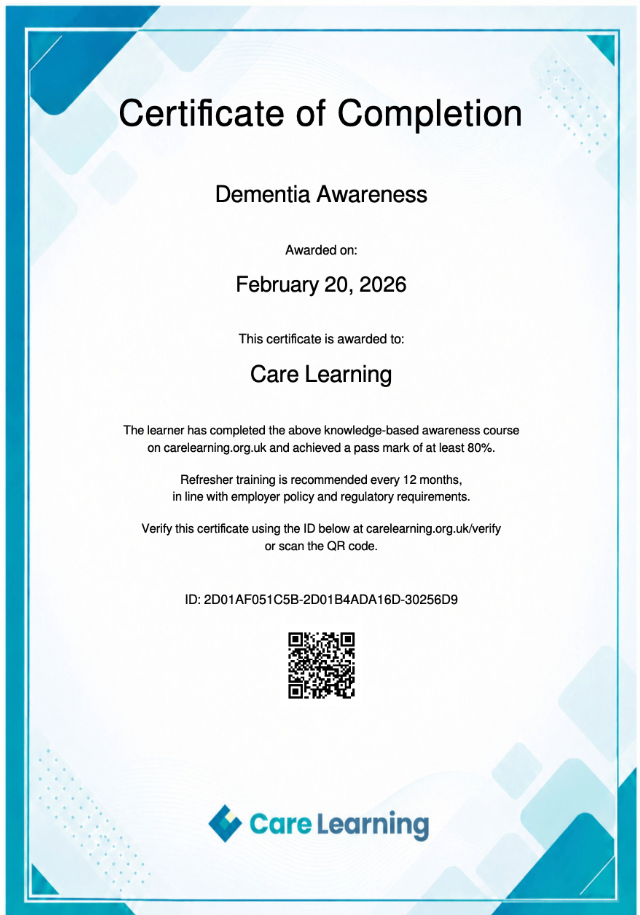
Will I receive a certificate?
Yes. A certificate is issued after successful completion.
Professional boundaries support safe, respectful and consistent domiciliary care. This course gives learners a practical framework for recognising changing expectations, maintaining appropriate limits and using supervision, reporting and safeguarding procedures when concerns arise.
Enrol now to build your understanding of professional boundaries in domiciliary care.